Key Points:
- Markets and bazaars will face regular monitoring to enforce official rates.
- Price control magistrates must increase their field presence and act against overcharging, profiteering and hoarding.
- Complaints will be resolved on a priority basis; departments must meet KPI targets on time.
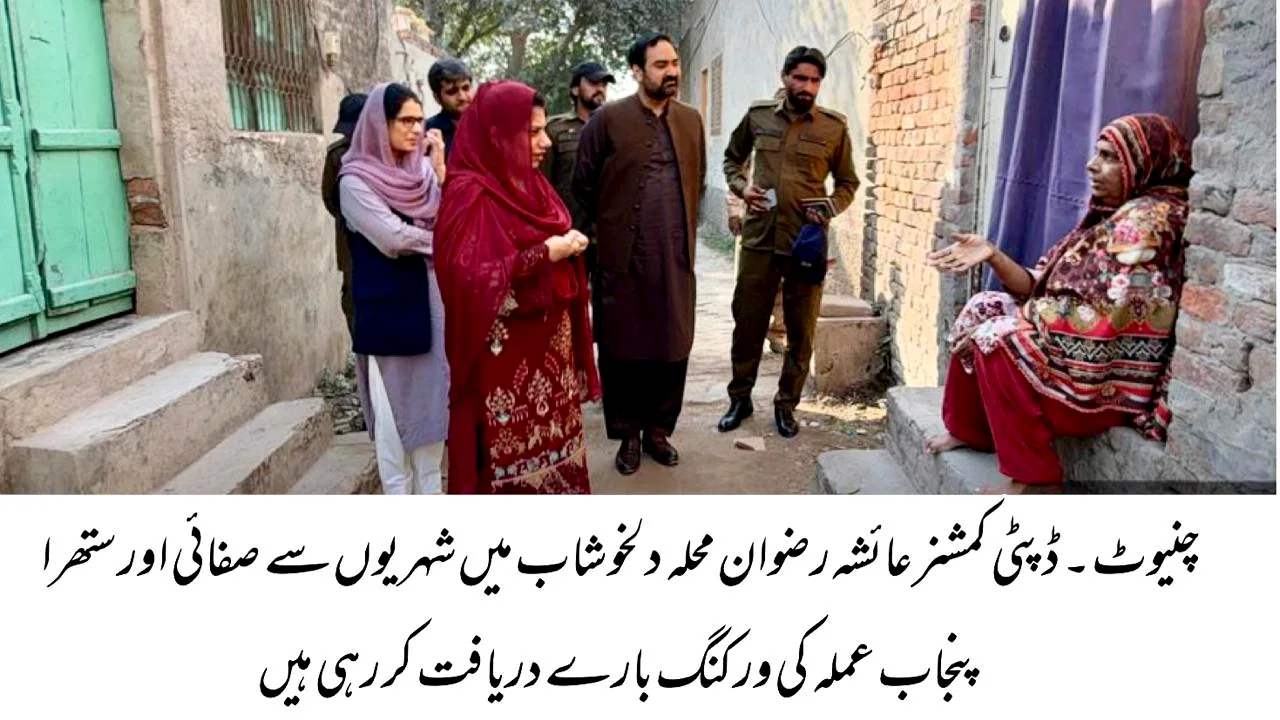
- Deputy Commissioner visited Mohalla Dilkhushab and asked residents about cleanliness door to door.
CHINIOT: Markets will face regular checks as officials move to end overcharging and hoarding of essential goods.
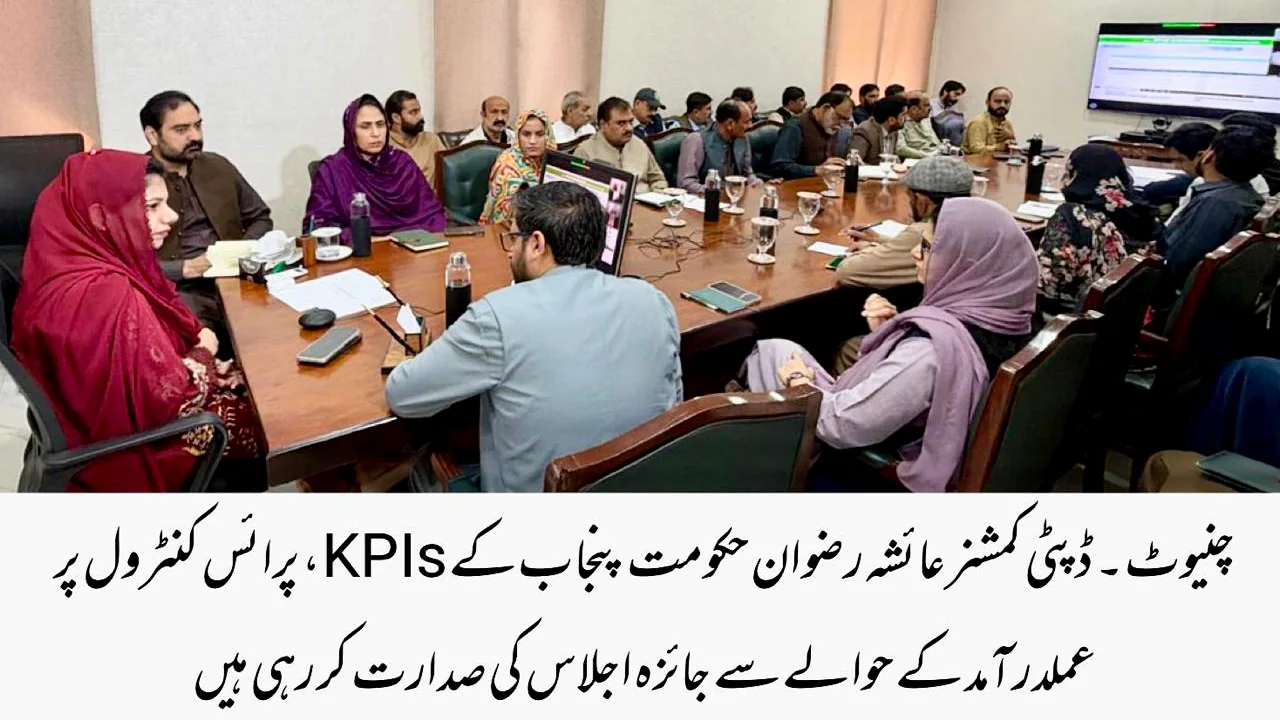
According to the district administration handout, Deputy Commissioner Ayesha Rizwan chaired a meeting on district price control, the District Inspection Team for Complaints and the Punjab government’s performance targets (KPIs).
Price control and complaints
The meeting reviewed essential-item prices, enforcement of official rate lists and steps to prevent hoarding and profiteering. It also reviewed complaint redressal and progress on Chief Minister Maryam Nawaz Sharif’s performance targets.
The deputy commissioner directed price control magistrates to increase their field presence and act without discrimination against overcharging, profiteering and hoarding. She said giving the public relief from inflation was a key responsibility of the district administration and no laxity would be tolerated.
The deputy commissioner directed that complaints be disposed of on a priority basis, with timely action on each one and its resolution ensured.
All line departments must progress in line with their targets and timelines. The officer concerned will be responsible for any delay or negligence in meeting them.
“Giving the public relief from inflation was a key responsibility of the district administration and no laxity would be tolerated.”
She said public relief, good governance, transparency and better departmental performance were the district administration’s top priorities, in line with the chief minister’s vision.
Additional Deputy Commissioners Wasiq Abbas Haral and Ghazala Yaseen, Assistant Commissioners Shabana Nazir, Taimur Adil and Habiba Bilal, SNA Syed Mehtab Hussain, line-department officers and price control magistrates attended.
Under the Punjab Price Control of Essential Commodities Act 2024, no seller may charge more than the maximum price for an essential commodity (section 7). A breach can draw up to three years in prison or a fine of up to Rs500,000 (section 10).
 Clean Ghafoorabad by evening, DC tells sanitation staff
Cleanliness check in Dilkhushab
The deputy commissioner later visited Mohalla Dilkhushab with MD Suthra Punjab Wasiq Abbas Haral, Assistant Commissioner Chiniot Shabana Nazir and Chief Officer Municipal Committee Muhammad Arif.
She walked the inner streets, inspected cleanliness arrangements and asked residents door to door about cleanliness, staff attendance, performance and door-to-door services. She also sought their views on the Suthra Punjab steps under way in the area.
She directed officers to make the cleanliness system more effective, with regular monitoring in all areas including inner streets. The Suthra Punjab manager and the monitoring officer were told to improve standards and keep staff performance under continuous watch.
Author Profile

- The Grand Lines covers news that impacts lives, uncovers truths, and keeps you fully informed.
Latest Entries
 FaisalabadNovember 24, 2026Main accused held over boy beaten to death with bat
- FaisalabadNovember 24, 2026Chak Jhumra, Samundri crashes kill two, hurt five
- FaisalabadNovember 24, 2026Tandlianwala caller held over staged Rs 1,087,000 robbery
- ChiniotNovember 24, 2026Chiniot police bring FIRs, licences to citizens’ doorsteps