Key Points:
- Police encounters in 1990s Punjab were repeated until society accepted them as normal
- The custodial slap, returned by the complainant, is now travelling the same road
- Unlike the killings, the slaps are officially owned, filmed in daylight and proudly shared
- Law and Islam both distinguish error from intent; instant justice erases that line
In Punjab, justice no longer waits for a courtroom; it arrives as a slap, to applause.
Sociology and mass communication teach a concept called the normalisation process theory. Put simply, anything repeated often enough stops looking new. It may clash with law, morality and tradition, yet repetition dulls the shock until society accepts it as normal.
Punjab has now lived this theory twice. The first time was with the police encounter.
In the 1990s, under a PML-N government in Punjab, police encounters came in a flood, bringing allegations of staged killings in their wake. The encounters continued at such a pace that they began to look normal.
In my years as a journalist, officers would argue that only men who had killed during a robbery or committed rape were eliminated this way.
Their case was that complainants were spared years of court rounds and that fear of the law had to be planted in criminal minds.
Our answer never changed: shorten the court process through legislation, but the power to punish is not the police’s to take. The argument faded, not because the police case grew stronger, but because society accepted the new normal.
Today, when a suspect in a serious crime is arrested, social media fills with demands for an encounter. The few voices still speaking of law are drowned out.
Saddest of all, many journalists celebrate the alleged staged encounters instead of defending the Constitution and the rule of law.
Encounters are now accepted. The story has moved a step further.
After a petty quarrel, when a stronger man slaps a weaker one, the police swing into action.
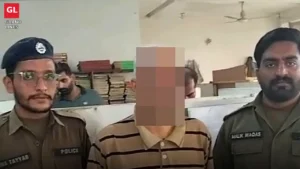
The man who slapped is arrested, his hands are tied behind his back and he is produced before the man he slapped, who is silently permitted to return the slap.
In Lahore, a petrol pump employee slapped an accused in police custody. In Faisalabad, a sales girl slapped an accused in custody and the Punjab chief minister proudly shared the videos on her social media.
Does the law permit violence against an accused in custody, by police or complainant? Has the work of the courts ended?
Will this not breed personal enmities, settled the moment a chance for revenge appears? Will it not teach that a slap answered instantly is justice done?
And what becomes of the law that forbids taking the law into one’s own hands — should that page be torn out of the book?
Read More: Husband held for beating wife publicly
This slap justice is more dangerous than the extrajudicial killings. Those killings were never officially admitted; they happened in the dark, in deserted places. The slaps are owned proudly by the chief minister herself, delivered in daylight inside police stations, filmed and shared.
This slap justice is more dangerous than the extrajudicial killings.
Some voices are still being raised against this practice, but the fear is that it too becomes the new normal.
And if it does, what comes next? Suppose a ruler tomorrow, in the name of instant justice, places a pistol in the hand of a murdered man’s brother or father and tells him to take his revenge.
And God forbid, God forbid — may that day never come — if a rape accused is caught and a ruler bent on instant justice decides the punishment on the spot?
Have the champions of instant justice forgotten that human beings err? Mistakes, lapses, acts done under mental stress, in the heat of the moment — law and religion both recognise these weaknesses.
That is why the law distinguishes error from intent and grades their punishments differently and why Islam provides the option of diyat.
Societies stand on law and justice and both follow a settled procedure. Rule by emotion sinks societies.
Author Profile

-
Holding an M.Phil. in Mass Communication and over two decades of experience, Ahtsham Ul Haq has been associated with Pakistan's prominent news channels, including Express News and Aik News. His fearless investigative journalism includes major stories that played an important role in the health sector and brought justice to the oppressed. He writes and speaks the truth without compromise, which has earned him a respected place in journalistic circles.
ماس کمیونیکیشن میں ایم فل اور دو دہائیوں کے وسیع تجربے کے حامل احتشام الحق پاکستان کے مؤقر چینلز (ایکسپریس نیوز، ایک نیوز) سے وابستہ رہے ہیں۔
ان کی نڈر تحقیقاتی صحافت کے کریڈٹ پر ایسی بڑی سٹوریز ہیں جنہوں نے شعبہ صحت میں اہم کردار ادا کیا اور مظلوموں کو انصاف بھی دلایا۔
وہ سچ کو بغیر کسی مصلحت کے من و عن لکھنے اور کہنے کی جرأتِ رندانہ رکھتے ہیں، جس کی بنا پر صحافتی حلقوں میں انہیں انتہائی باوقار مقام حاصل ہے۔
Latest Entries
 ExclusiveNovember 10, 2026A slap on the wrist, in the face