
Key Points:
- A dozen church members saw Walter McMillian frying fish at home on the morning Ronda Morrison was murdered eleven miles away.
- The case rested on Ralph Myers, a man who had never met Walter and who later said police pressure made him lie.
- The jury recommended life without parole, but the judge overrode it and sentenced Walter to death.
A dozen church members saw Walter McMillian at home while a young woman was murdered eleven miles away.
On the morning of 1 November 1986, Walter McMillian was frying fish at his house near Monroeville, Alabama. It was a church fish fry, planned for days.
A dozen members of his congregation were there with him. A police officer stopped by and bought a sandwich.
The officer logged the visit in his book.
At about a quarter past ten that same morning, eighteen-year-old Ronda Morrison was found dead at Jackson Cleaners, a dry-cleaning shop in Monroeville. She had been shot three times in the back.
She was a college student, home for the weekend, working a Saturday shift at the shop. Her murder shocked the small town and terrified it.
The police had no suspect and no motive. Weeks passed and then months.
The investigation went nowhere. The new sheriff, Tom Tate, elected days after the murder, was under mounting pressure to make an arrest.
Walter McMillian was a pulpwood businessman, a black man who had built a successful logging business in a county where few black men owned anything. He was married to Minnie and had three children.
He had no criminal history beyond a bar fight years earlier. But he had one vulnerability the whole county knew about: an affair with a white woman named Karen Kelly, twenty-five and married, exposed in her husband’s custody proceedings.
The break in the case came from a man named Ralph Myers. Myers was illiterate.
His face had been badly burned and disfigured as a child in foster care. He was himself facing a murder charge in another county, the murder of a woman named Vickie Lynn Pittman.
Myers told the police that Walter McMillian had killed Ronda Morrison.
Myers had never met Walter. When the police took him to a store to identify the man, Myers could not pick Walter out among several black men standing there.
He had to ask the store owner to point him out. That should have ended the matter.
It did not.
On 7 June 1987, more than a dozen officers stopped Walter’s truck on the road. They arrested him on a sodomy charge, a pretext invented after officers suggested to Myers that Walter had sexually assaulted him in prison.
The officers used racial slurs and threatened him with lynching. Sheriff Tate invoked the lynching of Michael Donald in Mobile, a black teenager murdered by Klansmen six years earlier.
The fish fry should have saved him. A dozen witnesses placed him at his house on the morning of the murder.
Walter and his mechanic, Jimmy Hunter, had the transmission out of his truck by half past nine, so he could not have driven to Monroeville anyway. The murder was eleven miles away.
But the police were not interested in the alibi. They were interested in a conviction.
On 1 August 1987, Walter McMillian was placed on death row at Holman Correctional Facility in Atmore. He had not been tried.
He had not been convicted. He was a pretrial detainee.
Putting a man on death row before trial was nearly unheard of and plainly unlawful. Ralph Myers was put on death row beside him.
The cell was five feet by eight feet. Walter spent twenty-three hours a day inside it.
The electric chair sat nearby, a yellow wooden chair the prisoners called Yellow Mama. In his first three weeks on the row, all Walter heard about was the execution of John Evans.
His death had taken fourteen minutes and three separate jolts of nineteen hundred volts.
The case against Walter was built on lies. A jailhouse informant named Bill Hooks claimed he had seen Walter’s low-rider truck at the cleaners on the morning of the murder.
Hooks had been promised his release and reward money. The truck had not been a low-rider on the day of the murder.
The mechanic who converted it, Clay Kast, confirmed that the work was done more than six months afterwards. Hooks was later paid about five thousand dollars, in cheques found in the county records.
The trial was moved to Baldwin County, where the population was nine per cent black. The neighbouring counties were between thirty-two and seventy-two per cent black.
The district attorney, Ted Pearson, struck all but one black prospective juror. Walter McMillian was tried by a nearly all-white jury.
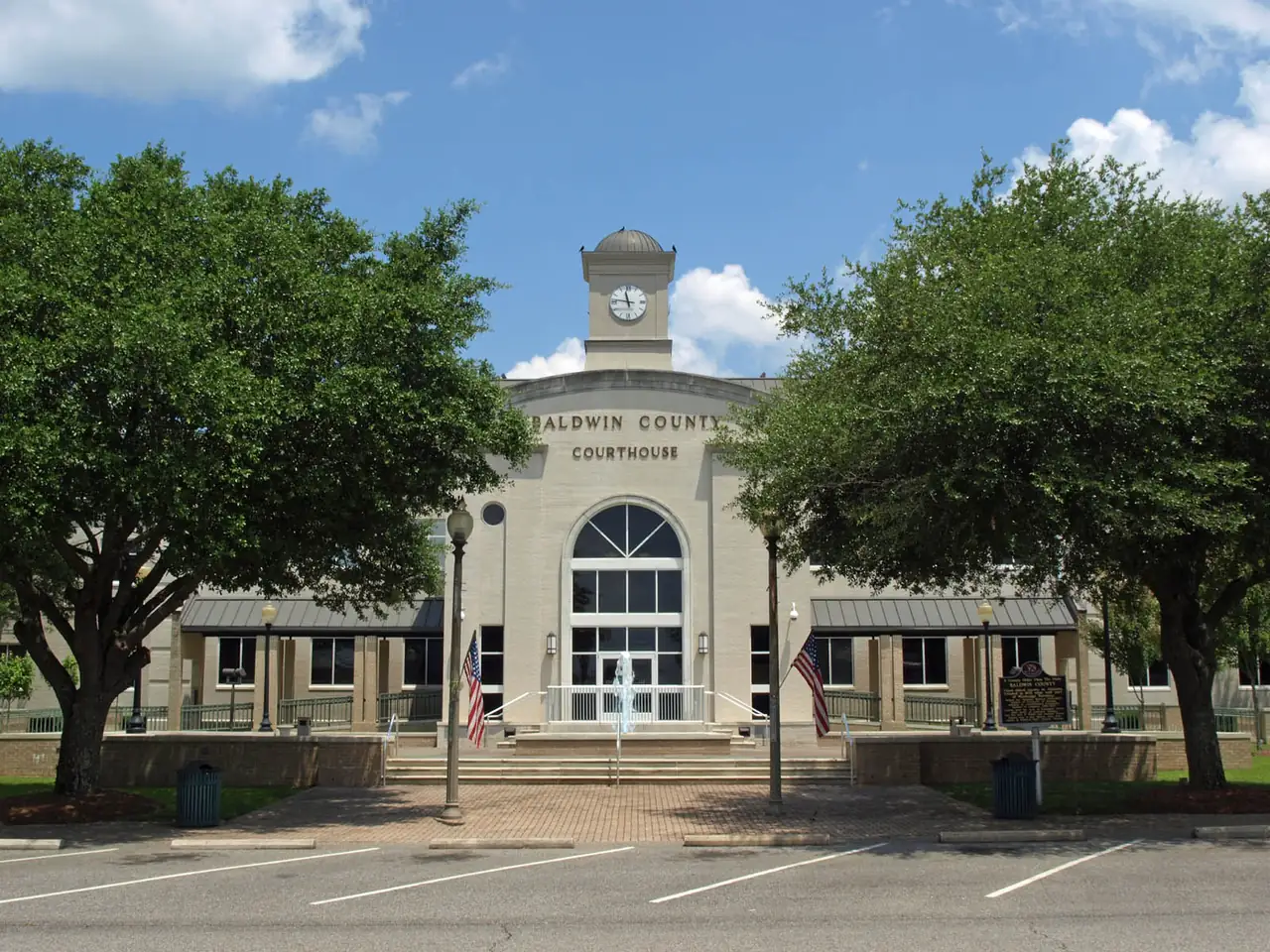
The trial lasted a few days in August 1988. Myers testified that Walter had killed Ronda Morrison.
He added a mysterious third man with salt-and-pepper hair who had never appeared in any earlier account. Ronda’s uncle, Ernest Welch, testified that the fish fry had been on a different day.
The defence called only three of the dozen alibi witnesses. The jury deliberated for less than three hours and found Walter guilty.
The jury recommended life imprisonment without parole. The judge, Robert E.
Lee Key, overrode the recommendation and sentenced Walter McMillian to death. Alabama was one of the few states that allowed a judge to override a jury’s life sentence in this way.
 The canal built on bones that no ship could use
Bryan Stevenson, a young lawyer with the Southern Prisoners Defense Committee in Atlanta, met Walter on death row in 1988. Walter told him he was innocent.
Stevenson believed him. The appeal was denied by the Alabama Court of Criminal Appeals in a seventy-page opinion.
In February 1989, Stevenson and Eva Ansley opened a small nonprofit law office in Montgomery, the Equal Justice Initiative, to take cases like Walter’s.
The case turned on Ralph Myers. First came a telephone call.
Then, in person at St. Clair Correctional Facility, Myers told Stevenson the truth.
“I lied,” he said. “Everything I said at McMillian’s trial was a lie.”
He said the police had pressured him and threatened him with the death penalty. He had recanted before the trial as well.
The authorities had sent him to death row for it.
Stevenson demanded a new hearing. At the hearing, the truth about the evidence came out.
The state had told the court there were only two recorded statements from Myers. There were at least six more.
In them Myers had repeatedly told the police that he knew nothing about the murder and nothing about Walter McMillian. None of those tapes had been disclosed to the defence, as the law required.
When the hearing ended, the state put on no rebuttal case at all.
The Alabama Court of Criminal Appeals ruled in Walter’s favour on 3 February 1993. The state joined the motion to dismiss the charges.
Judge Pamela Baschab granted it. Walter McMillian walked out of prison a free man.
He had spent six years on death row for a murder he did not commit. When he collected his belongings at Holman, his wallet still held twenty-three dollars.
Six years on death row for a murder he did not commit.
He was the fiftieth person exonerated from death row in the modern era, according to the Death Penalty Information Center. The story made the front page of the New York Times.
The television programme 60 Minutes told his story to the whole country.
Freedom did not undo what prison had done. Walter had watched six men leave the row for execution.
His memory began to fail. His doctor said the dementia was likely caused by the trauma of his years on death row.
He spent his last years in a nursing home in Montgomery. He died on 11 September 2013.
His funeral was held at Limestone Faulk A.M.E. Zion Church, near Monroeville, among the people who had fried fish with him on the morning that should have saved him.
Source: Bryan Stevenson, Just Mercy (2014), Chapters 1, 3, 5, 7, 9, 11, 13 and Epilogue.
Author Profile

- The Grand Lines covers news that impacts lives, uncovers truths, and keeps you fully informed.
Latest Entries
 True StoriesNovember 29, 2026Six years on death row for a murder he could not have done
- CartoonNovember 29, 2026Faisalabad Cartoon: ‘Dad, why is that man so happy?’
- Predictive AlertsNovember 29, 2026Faisalabad AQI 473 Hazardous at 9:00 AM
- FaisalabadNovember 28, 2026IGP orders 27 transfers; Faisalabad gets four new SDPOs