
Key Points
- The Council of Loom Owners Association has told Prime Minister Shehbaz Sharif that imported narrow width fabric and yarn are displacing domestic manufacturing, employment and industrial capacity.
- The council estimates annual imports at about 400,000 tons of fabric and 240,000 tons of yarn, with combined textile-related imports of about 1.84 million tons.
- It says imported narrow width fabric equals about 30 per cent of domestic fabric production.
- The council has sought anti-dumping and import duties on imported fabric and yarn, the removal of all yarn and fabrics from the Export Facilitation Scheme and quarterly valuation of imports in consultation with APTMA.
FAISALABAD: The Council of Loom Owners Association (CLOA) has warned Prime Minister Shehbaz Sharif that large-scale imports of narrow width fabric and yarn are displacing domestic manufacturing, jobs and industrial capacity.
In a letter dated October 9, council chairman Waheed Khaliq Raamay said the imports were not merely replacing locally manufactured products.
He said they were also undermining decades of investment in spinning, weaving, processing and the wider textile value chain.
The scale of imports
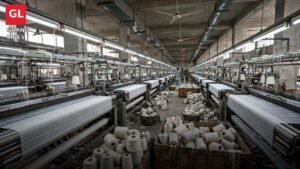
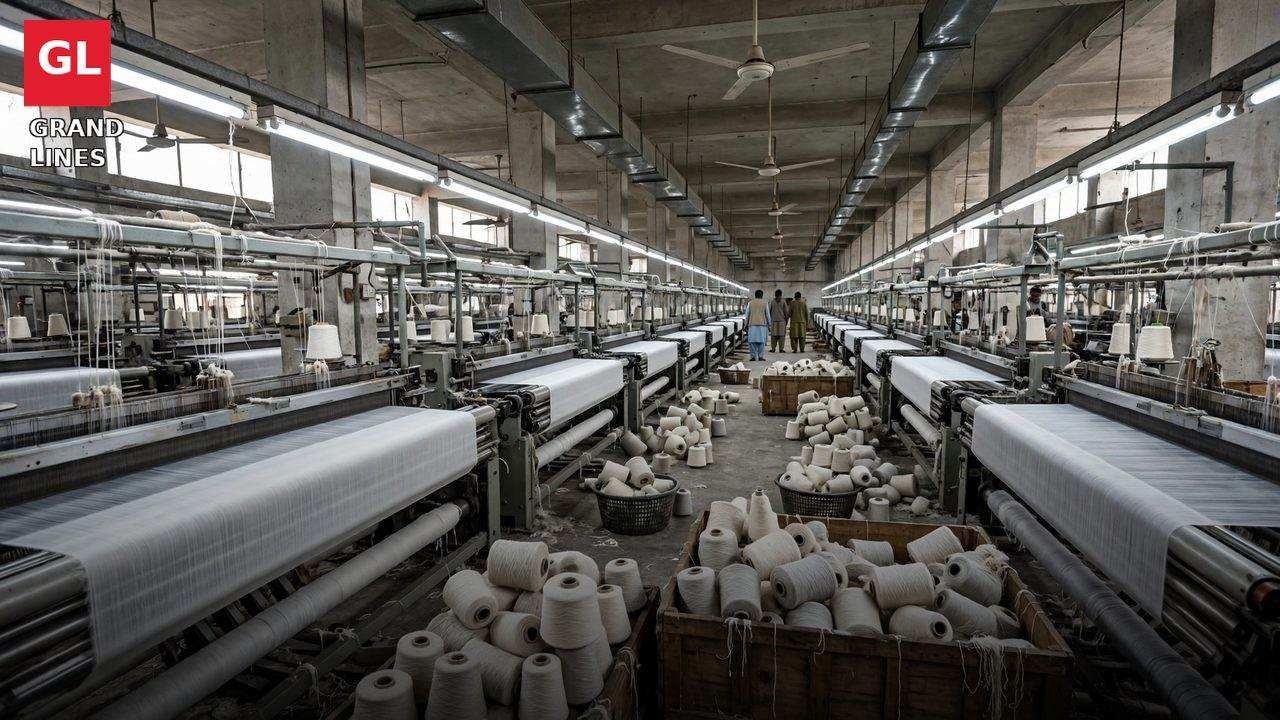
The council estimated that about 400,000 tons of fabric is imported every year in various forms, displacing domestic weaving and processing activity in both organised mills and smaller weaving units.
It said another 240,000 tons of imported yarn competes directly with domestic spinning mills, reducing demand for locally manufactured yarn and affecting spindle utilisation.
According to the figures shared in the letter, fabric imports stood at 32,649 metric tons in July 2026 and 23,949 metric tons in August 2026, while yarn imports were 16,710 metric tons in July and 12,187 metric tons in August.
The council put combined annual imports of textile-related products at approximately 1.84 million tons.
Impact on weaving and spinning
The letter said imported narrow width fabric was estimated to represent the equivalent of about 30 per cent of domestic fabric production, showing the scale of competitive pressure on the weaving sector.
It said hundreds of thousands of conventional, shuttleless and modern looms potentially face reduced production opportunities as imported fabrics substitute locally woven products.
It said this affects not only weaving operations but also yarn consumption, sizing, dyeing, finishing and the broader textile supply chain.
The imports were also affecting the economics of millions of installed spindles, the council said, adding that as mills operate below optimal capacity, fixed production costs rise, profitability weakens and future investment becomes increasingly difficult.
It warned of underutilised industrial capacity, jobs at risk across spinning, weaving, processing and garments, increased foreign exchange outflows and the loss of industrial ecosystems built over decades.
Under-invoicing and abuse of EFS
The council said imports of cotton yarn and fabrics under Chapter 52 and man-made fibre (MMF) yarn and fabrics under Chapter 55 were being grossly under-invoiced, causing serious loss of government revenue and injury to domestic manufacturers.
It said massive under-invoicing in consignments imported from China was seriously distorting domestic market prices.
It said the count and description of yarn and fabrics were often misdeclared to avoid correct valuation and called for regular examination of import declarations with APTMA input, including sharing import GDs for Chapters 52 and 55 with APTMA by the second of each month.
The council also raised concerns about the reliability of existing testing arrangements and proposed extensive customs examination and laboratory tests to verify actual count and quality.
On the Export Facilitation Scheme (EFS), the letter said cotton yarn and cotton greige cloth were excluded from the scheme in 2025, after which misdeclaration of cotton fabric had increased tremendously, with greige cloth being imported under different garbs and descriptions.
It said Chapter 55 yarns and fabrics had not yet been excluded from EFS, leading to the virtual closure of the local MMF yarn and fabric industry.
Imports of Chapter 55 yarns under EFS had increased from around 1.7 million kg in January 2024 to an average of 4.52 million kg per month during June to August 2026, the council said.
It said Pakistan’s synthetic textile exports had not increased correspondingly, indicating that certain non-genuine exporters were misusing EFS licences and diverting imported yarn into the domestic market.
The demands
The council proposed that realistic values for yarn and fabrics under Chapters 52 and 55 be fixed on a quarterly basis in consultation with APTMA to curb under-invoicing.
It demanded that all sorts of yarn and fabrics falling in Chapters 52 and 55 be removed from EFS.
It said the step would revive local industry and save the jobs of millions of workers and would not hurt genuine exporters, who would get refunds of taxes under the FASTER system.
The letter also sought a review of the solar policy for the weaving and industrial sector and the provision of soft looms to weaving units for technology transfer from conventional looms towards better quality fabrics and energy efficiency.
“Kindly protect local manufacturing industry and enforce anti-dumping duty / import duty on imported fabric and yarn in Pakistan,” the letter concluded.
Author Profile

- Award-winning investigative journalist with 20+ years of experience across Pakistan's leading news organisations, including 15+ years as Senior Staff Correspondent at Dawn. Driven by a lifelong passion for investigative journalism and human rights, with a proven record of hard-hitting stories that forced official action — from hospital negligence and illegal land grabs to harassment probes and social injustice. He is the recipient of the K.C. Kulish International Award for Excellence in Print Journalism.
Latest Entries
 ExclusiveNovember 4, 2026A Stitch in Time Saves a ‘Life’
- FaisalabadNovember 1, 2026367 of 794 Housing Schemes Illegal in Faisalabad
- CrimeOctober 25, 2026Eight Days On, Faisalabad Murder Case Awaits Official Word
- BusinessOctober 22, 2026Loom Owners Warn Textile Imports Displace Local Industry