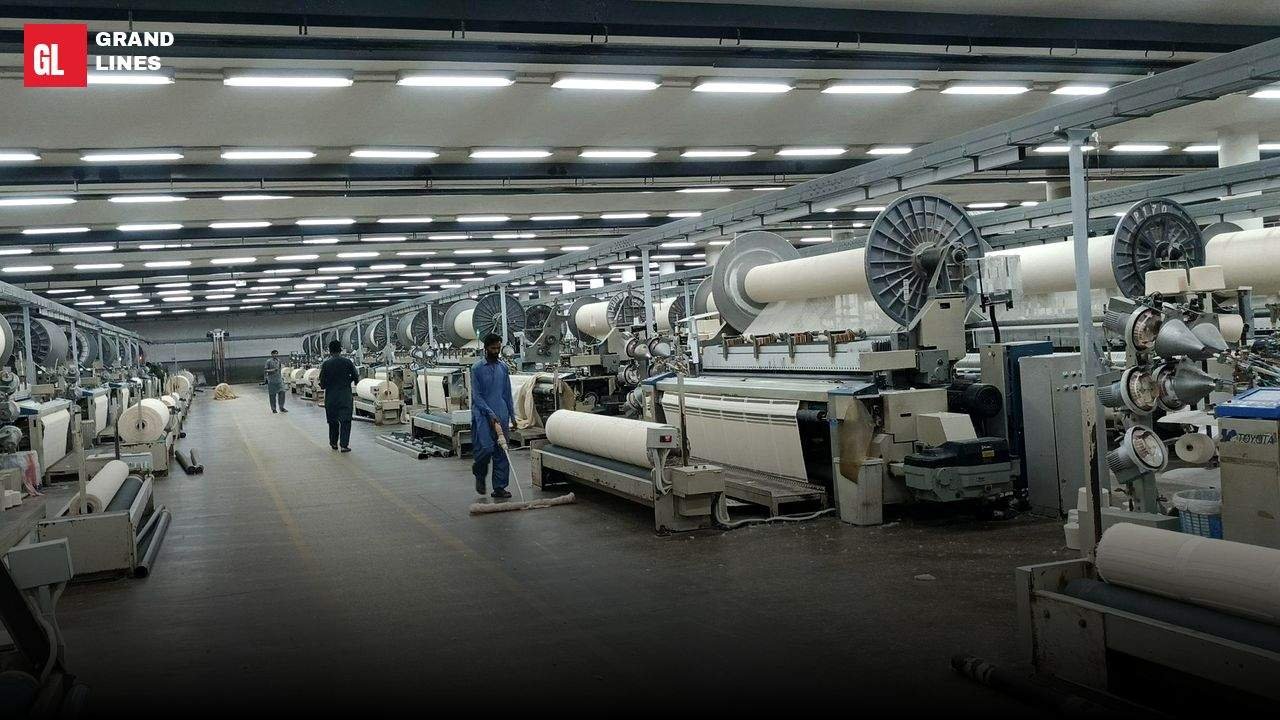

FAISALABAD: Textile export industry has expressed grave concern over the State Bank of Pakistan decision to raise the policy rate by 50 basis points to 12.0 per cent, the Pakistan Textile Exporters Association said.
In a statement on Monday, Pakistan Textile Exporters Association Chairman Rehan Naseem Bharara said the industry was grappling with expensive energy, financing and other essential inputs.
The rate increase, he said, would raise working-capital costs, constrain investment and make it harder for businesses to compete internationally.
While the SBP’s policy rate now stands at 12 per cent, the effective cost of industrial borrowing in Pakistan is substantially higher once bank spreads are applied, he said. He added that competing economies offered industrial credit at lower rates.
Rehan Naseem described industrial term loans in India priced at about 9.25 to 9.6 per cent a year. Machinery and small and medium-sized enterprise loans ranged from 8.5 to 12.5 per cent.
In Vietnam, small and medium-sized enterprise loans in supporting industries were securing annual rates of 8 to 10 per cent. In China, the weighted average lending rate for general enterprise loans stood at 3.04 per cent.
Targeted technological-upgrading loans were priced at 2.7 per cent, falling to an effective 0.85 per cent after state interest subsidies.
An exporter in Pakistan is being asked to compete globally while paying two to three times the cost of capital borne by counterparts in China or Vietnam, he said. Pakistani exporters paid significantly more than competitors in India, he said.
A stable and competitive export sector was essential to Pakistan’s economic resilience, he added. He called for coordinated measures to reduce production costs and support export-led growth.
PTEA Vice Chairman Haris Yousaf said exporters were already struggling to finance working capital, procure raw materials and meet operating expenses. Higher borrowing costs, he said, would further weaken their international competitiveness.
He warned that the rate increase could undermine the government’s export-led growth ambitions. A prolonged decline in exports, he said, could slow economic growth, limit fiscal space for development spending and weaken the country’s ability to meet external debt obligations.
He also said shipping costs had surged by nearly 200 per cent, leaving exporters to absorb substantial additional expenses.
Small and medium-sized enterprises, which contribute around 45 per cent to Pakistan’s gross domestic product, needed easier access to finance to grow and remain sustainable, he said. Higher borrowing costs could add to their financial pressures and discourage investment and economic activity, he said.
The PTEA reiterated its call for a coherent, export-focused policy framework. The framework should treat the textile value chain as an integrated ecosystem rather than a series of separate taxation targets.
Author Profile

- The Grand Lines covers news that impacts lives, uncovers truths, and keeps you fully informed.
Latest Entries
 BusinessOctober 26, 2026Cotton Rate in Pakistan Today: 26 October 2026 — Rs 18,000/Maund
- BusinessOctober 26, 2026PTEA Warns Rate Hike Will Hurt Textile Exports
- BusinessOctober 26, 2026PHMA North Zone Warns Rate Hike Will Hit Textile Exports
- FaisalabadOctober 26, 2026Farmers Advised to Complete Wheat Sowing by Nov 20