Key Points:
- ADC Headquarters named focal person for the business community’s problems
- Unnecessary petrol pump permits abolished; four kanals on a 60-foot road now required
- City cleanliness up from 40 to 60 per cent; lighting arranged on 39 of 76 main roads
- Wasa schemes worth Rs30 billion under way; main lines to improve by December 2027
- Chamber demands one-window operation and Circular City status for Faisalabad
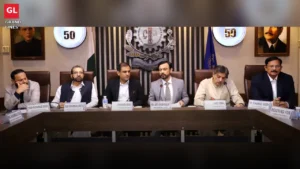
FAISALABAD: Deputy Commissioner Muhammad Numan Siddiq on Friday assured traders and industrialists that the business community’s problems would be resolved on a priority basis and named the Additional Deputy Commissioner Headquarters as focal person.
He said many unnecessary permits required for setting up a petrol pump had been abolished and only four kanals of land on a 60-foot road was now required.
He asked the business community to identify other such unnecessary permits so that they could be abolished permanently.
He said many no-objection certificates and permits had been made online, yet people still visited offices although the facility was available from home round the clock.
The focal person would hold an awareness session at the DC office next week, he added.
He said: “There is no room for sealing shops and factories; however, challans or fines can be imposed for violations.”
“There is no room for sealing shops and factories; however, challans or fines can be imposed for violations.”
City infrastructure
He said the city’s infrastructure was gradually improving and cleanliness in the city had risen from 40 per cent to 60 per cent, though there was room for further improvement.
The deputy commissioner said he had taken charge as Administrator of the Municipal Corporation a few days ago.
Three plans had been prepared for street lights and lighting had been arranged on 39 of 76 important roads in the first phase, he said.
Wasa schemes worth Rs30 billion were under way, he said, adding that the main lines would be improved by December 2027 under the set priorities.
He said the metro project would be completed by July 2027 if funds became available.
He assured the meeting that land would be allocated for graveyards and said the city’s businessmen had extended every possible help to the 12 government hospitals.
He said Allied Hospital was the largest hospital in Punjab, with 10,000 patients visiting its outpatient department daily. The deficiencies in the other hospitals had been identified so the business community could play its part there as well, he added.
A private organisation was building a rehabilitation centre in the city while no such facility existed in the government sector, he said.
He assured the chamber’s elected leadership of a meeting with Punjab Chief Minister Maryam Nawaz so that more and bigger development schemes could be brought for the city.
He also promised meetings with the business community every three months so that their problems could be resolved on a priority basis.
He said Satiana Road was being dualised, which would greatly reduce the distance to Lahore via the M-3 motorway. However, the federal and provincial governments had a difference over the construction of an interchange, he said.
There was no quality university in the private sector in Faisalabad and efforts were needed in this regard, he said.
Chamber’s demands
Earlier, welcoming the deputy commissioner, FCCI President Arif Ehsan Malik highlighted the city’s industrial, trade and business problems.
He said the industrial area, spread over more than 8,000 acres, was no longer limited to textiles. The automobile, mobile phone, tiles and foundry sectors were also active there, he added.
The National Group had been the chamber’s custodian for 30 years and enjoyed the business community’s trust, he said.
He demanded a focal person for continuous liaison with the district administration, a transparent one-window operation for no-objection certificates and revenue matters and a clear industrial inspection framework for checking by various government departments.
He also sought a special campus for the small and medium enterprise sector and immediate resolution of civic infrastructure, cleanliness and sewerage problems.
He said the anti-encroachment measures were commendable but the dignity of traders must be kept in view during the operations.
Industry, already running on half shift, could not bear further closure, he said. A clear and transparent action plan for industry in the name of smog during winter should be formed, he demanded.
He also demanded timely completion of the metro project, land for a new graveyard, shifting of traffic to ring roads, expansion of government hospitals, establishment of a modern rehabilitation centre and clean water supply through Wasa.
Strategic projects
The president said that, according to National Textile University research, Faisalabad recycled 80 to 90 per cent of the country’s textile waste and 60 to 65 per cent of its plastic waste.
He demanded that Faisalabad be officially given the status of ‘Circular City of Pakistan‘.
He also sought early implementation of the land allotment plan for agri-tech and fin-tech startups, approved six months ago.
Former FPCCI president and group head Mian Muhammad Idrees and former FCCI president Mian Javed Iqbal also addressed the session and paid tribute to Commissioner Imran Hamid Sheikh.
They praised Additional Deputy Commissioner Headquarters Adil Umar, saying he understood the business community’s problems and remained ready to resolve them.
They said the National Group had worked for the resolution of the business community’s problems for 30 years. If a favourable environment was provided, ‘we can turn around the national economy’, they added.
They recalled the business community’s services during natural disasters and said a business family get-together would be held on Nov 2 with leading traders from across the country attending.
A question-and-answer session was also held, in which Senior Vice President Mian Muhammad Saeed, Vice President Muhammad Yaseen, Rana Muhammad Sikandar Azam, Chaudhry Muhammad Nawaz and Mian Tanveer Riaz took part.
At the end, FCCI President Arif Ehsan Malik, along with Mian Muhammad Idrees and Mian Javed Iqbal, presented the chamber’s honorary shield to the deputy commissioner. A group photo was also taken on the occasion.
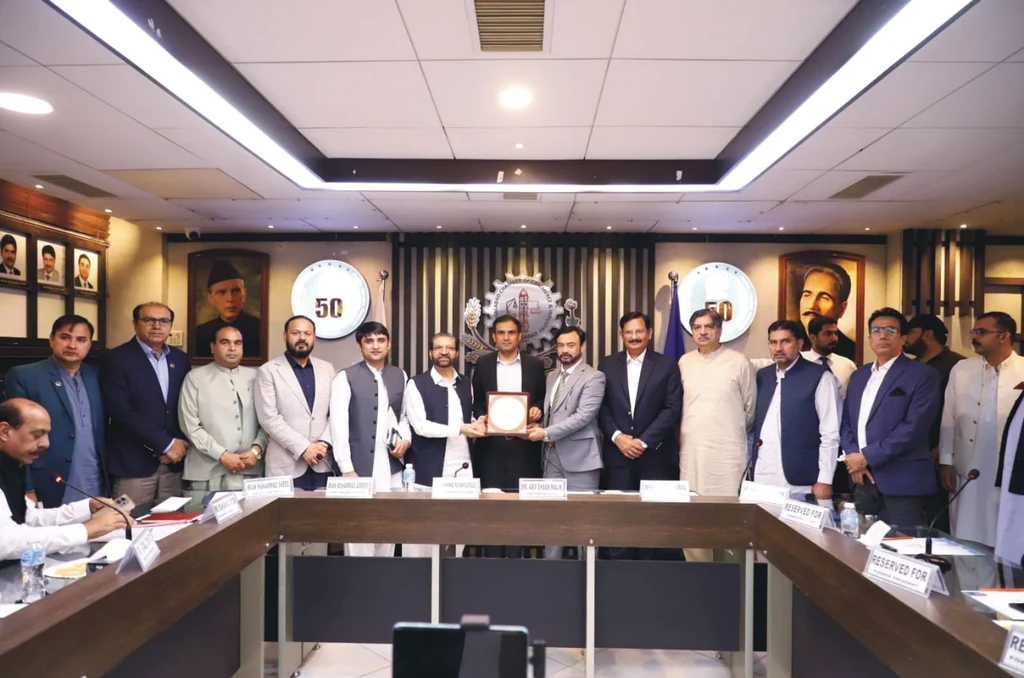
The deputy commissioner also recorded his impressions on the chamber’s podcast during the visit.
Author Profile

- The Grand Lines covers news that impacts lives, uncovers truths, and keeps you fully informed.
Latest Entries
 BusinessOctober 30, 2026No Sealed Shops, No Closed Doors: DC Assures Faisalabad Business Community
- FaisalabadOctober 30, 2026Boots on the Ground: 32,000 Students Take Wheat Advice to Punjab’s Farmers
- BusinessOctober 30, 2026Cotton Rate in Pakistan Today: 30 October 2026 — Rs 17,800/Maund
- PakistanOctober 30, 2026Modern Operation Theatre Opens at Jhang Veterinary Hospital