Key Points:
- The proposal: Tehsil City becomes Lyallpur and Tehsil Sadar becomes Sandal.
- Ahtshamul Haq: naming belongs to literary circles, not the bureaucracy; changing the name brings no development.
- Khadim Hussain Gill: end alleged corruption and needless rounds in tehsil offices; act against the adulteration and inflation mafia.
- Hassam Ahmed: the name debate is pointless; fix facilities and administration first.
- Lyallpur became Faisalabad in 1977 after King Faisal; residents are not against historic names, they want the system inside offices to change.
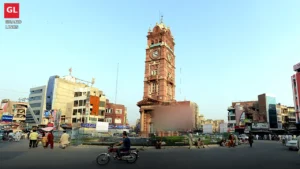
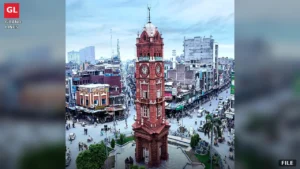
FAISALABAD: A proposal to rename two tehsils has split Faisalabad between pride in names and anger at misplaced priorities.
Faisalabad, Pakistan’s third-largest industrial city, is caught in a new debate that runs from social media to tea houses and press circles. The proposal came to light on 21 November.
It would rename Tehsil Sadar as Sandal and Tehsil City as Lyallpur. Divisional Commissioner Dr Imran Hamid made the proposal to Deputy Commissioner Muhammad Noman Siddiq in a letter numbered 14/PS/COMM/2026.
On the face of it, this is only a proposal to change the names of two administrative units. Yet it has stirred a debate over historic identity in the city.
It has also raised a question among residents and local journalists. Are the city’s real problems its roads, hospitals and inflation, or the names written in official records?
Read More:
 Lyallpur name may return after 47 years
Emotional reactions and the question of identity
The letter drew a mixed but intense response from citizens on social media.
One group welcomed the return of the city’s old name Lyallpur and the region’s historic identity Sandal Bar. Many others called it an attempt to erase the city’s present identity, Faisalabad. They spoke of protest.
Naming is not the bureaucracy’s job: it belongs to literary circles

Ahtshamul Haq
Senior journalist, Faisalabad
Ahtshamul Haq, a senior journalist in Faisalabad, sees the matter in terms of administrative powers. In his view, changing or proposing a name should not fall within the ambit of the government or the bureaucracy at all.
“Changing a name, or giving one, is not an authority the government or the bureaucracy should hold at all. That is the work of literary circles, or of those who look after culture.”
“Here every new deputy commissioner who arrives gives some name as he pleases. The next officer who comes changes it. The same experiments were tried in the past with Government College University and with the city’s own name. But the question is whether the commissioner and the deputy commissioner have fixed the city’s administrative affairs that they have now set out to change names?”
Ahtshamul Haq believes that whether the tehsils are called Sadar and City or Lyallpur and Sandal, it will make no difference to the life of the ordinary citizen.
“Changing the name brings no development. The bureaucracy’s real job is to make life easier for the public and to fix financial and administrative matters, not to waste time changing names.”
Paperwork versus ground reality

Khadim Hussain Gill
Journalist, Ab Tak News
Another side of the debate is the daily problems of ordinary citizens and the working of government offices.
Khadim Hussain Gill, a journalist with Ab Tak News, is deeply unhappy with the proposal. He says people are driven by inflation and poverty to take extreme steps while social problems grow. The priorities of government officers are beyond understanding.
“We are not against the beauty of the city or its historical names, but what battle will we win by disturbing names people have known for decades?”
“The real work is to end the alleged corruption and the needless rounds the public faces in land matters in the tehsils. On paper, official work reaches for the sky, but the ground reality is the exact opposite. If officers focus all their attention on action against the adulteration and inflation mafia and on giving relief to the public, people will remember their work on their own. There will be no need to change any name.”
We are not against the beauty of the city or its historical names, but what battle will we win by disturbing names people have known for decades?
‘This is a pointless debate’

Hassam Ahmed
Bureau chief, Public News
Hassam Ahmed, bureau chief of Public News, calls the whole debate unnecessary.
He says Lyallpur was certainly a beautiful and historic name that should never have been changed. Decades later, though, the city needs attention to construction and development rather than a debate over changing names.
Hassam Ahmed says the posts being shared on social media show people dividing along slogans such as ‘a name from the British era’ and ‘our identity is Faisalabad’.
“This debate over the name is, in my view, a pointless debate.”
“Faisalabad is called a textile city and the Manchester of Pakistan, but to this day we have not been able to give this city basic facilities and a better administrative structure. We have still not been able to improve the state of the parks. The infrastructure is incomplete. We are even stuck arguing over how many bridges should be built on the city’s canal. In such a situation, starting a debate over names amounts to diverting attention from the real problems.”
What is the real question?
Changing names is nothing new in the administrative history of Faisalabad. In 1977, Lyallpur was renamed Faisalabad after King Faisal of Saudi Arabia.
This time, though, the attempt to revive old historic references at the tehsil level has started a new debate.
The views of local journalists and residents suggest the people of the city bear no hostility towards historic names.
They do want one thing first. The system inside those offices must change before the words on signboards do, because that is where the common man waits for hours to get his basic work done.
Author Profile

- Award-winning investigative journalist with 20+ years of experience across Pakistan's leading news organisations, including 15+ years as Senior Staff Correspondent at Dawn. Driven by a lifelong passion for investigative journalism and human rights, with a proven record of hard-hitting stories that forced official action — from hospital negligence and illegal land grabs to harassment probes and social injustice. He is the recipient of the K.C. Kulish International Award for Excellence in Print Journalism.
Latest Entries
 ExclusiveNovember 26, 2026Renaming brings no development, journalists say
- ExclusiveNovember 25, 2026Lyallpur or Faisalabad? City splits over tehsil name plan
- FaisalabadNovember 24, 2026From Sandal Bar to Faisalabad: the dates that made the city
- ExclusiveNovember 22, 2026Family feuds and guns in every home