Key Points:
- Family feuds kill as surely as street crime, yet no strategy exists to stop them.
- Delayed justice pushes citizens to pick up a gun and decide matters themselves.
- Sections 107 and 151 of the Criminal Procedure Code already allow the police to bind feuding parties to keep the peace.
- The state should take weapons back from citizens, licensed or illegal, across Punjab.
- Neighbourhood committees, panchayats, elders, teachers and ulema must help change mindsets.
The Punjab Police are working hard to control crime on the streets, in bazaars and in markets. Regular figures are also being released to show that the crime rate has fallen.
But what strategy is being adopted against the feuds festering inside homes, within families and in our streets and neighbourhoods, feuds that cause murder and bloodshed and leave people injured and crippled, children orphaned and women widowed? So far, there is no clear sign of one.
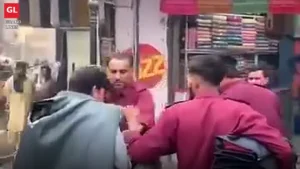
In the past few days alone, several people across different cities of Punjab have lost their lives in the name of honour, or because of old, family and property feuds.
This week alone, it emerged in Toba Tek Singh that a man had been arrested for allegedly drowning his wife in a river and passing her death off as suicide, while in Jaranwala three men forced their way into a house over an old enmity and beat a man to death with a stick.
 Murder passed off as suicide, husband arrested
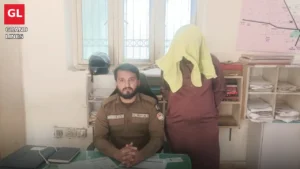 Man held for beating villager to death in Jaranwala
If the police are active against street crime, emergency measures should also be taken to prevent crimes of this kind. This is a cancer in our society that has existed for decades. Citizens suffer as much from it, in some cases even more, than they suffer from being robbed in streets, bazaars, squares and markets.
When the sole breadwinner of a household falls victim to a personal feud, who will look after that family? Only those who go through it know that pain; words cannot describe what these affected families and orphaned children endure every day.
A family feud or an old grudge does not appear overnight; it takes months or years to grow. It is not possible that the neighbours, the people around, or the police of the area concerned do not know about it.
The slow pace of our justice system also plays a large part in fanning this fire. Cases over land, property or minor disputes hang in the courts for years. When citizens lose hope of timely justice, they abandon patience and pick up a gun to decide matters themselves.
Moreover, in the modern age, social media has added fuel to the fire; airing a minor exchange of harsh words or a domestic grievance on digital platforms and challenging each other there becomes a matter of ego, which in the end leads to a bloody clash.
Parties fighting cases against each other and facing each other in court can clash at any time. The law already has preventive provisions such as sections 107 and 151 of the Criminal Procedure Code, under which the police can bind the disputing parties to keep the peace.
What is needed is for these provisions to be enforced seriously, instead of as a mere formality, so that citizens certainly demand their rights through legal means, but do not take the law into their own hands.
Until solid steps are taken in this direction, even the other efforts of the police will not be valued as they should be, because only the police can play the key role in stopping this bloodshed. There is also an urgent need to run an effective campaign across Punjab to take weapons back from citizens, whether licensed or illegal.
When the state is responsible for protecting citizens, there should be no justification left for ordinary citizens to keep weapons.
“When the state is responsible for protecting citizens, there should be no justification left for ordinary citizens to keep weapons.”
Just as a crackdown was carried out in the province against the ‘dala culture’, in which influential people moved around with armed guards and spread fear, yet those people are safe today, then what is the reason for licensed and unlicensed weapons to remain in every home?
If the state can protect the influential, ordinary citizens in the streets and neighbourhoods can also be given the confidence that protecting their lives and property is now the state’s responsibility.
Wherever the administration sees two families, neighbours or individuals locked in legal confrontation, they should be bound to the law so strictly that taking the law into their own hands invites the strictest action. Until society receives a clear message of a firm legal grip, this bloodshed will not stop: sometimes a woman is killed, sometimes a brother, sometimes a father and son, sometimes an uncle and nephew.
To end this cancer, strict laws alone are not enough; mindsets must also change at the social level. The government should form neighbourhood committees and activate the panchayat system, provided that this system proves genuinely effective instead of falling victim to the usual laziness of officers and the police, or to red tape.
At the same time, local elders, teachers and the ulema of mosques must also come forward, so that an atmosphere of tolerance, forgiveness and reconciliation can be established in society. If human lives are to be truly protected, practical steps are unavoidable; otherwise, if the practice of satisfying the authorities merely through figures continues, homes will keep being destroyed, women widowed and children orphaned.
Author Profile

- Award-winning investigative journalist with 20+ years of experience across Pakistan's leading news organisations, including 15+ years as Senior Staff Correspondent at Dawn. Driven by a lifelong passion for investigative journalism and human rights, with a proven record of hard-hitting stories that forced official action — from hospital negligence and illegal land grabs to harassment probes and social injustice. He is the recipient of the K.C. Kulish International Award for Excellence in Print Journalism.
Latest Entries
 ExclusiveNovember 22, 2026Family feuds and guns in every home
- ExclusiveNovember 13, 2026Keys to a Coffin
- ExclusiveNovember 11, 2026Coats on Their Shoulders, the Cold Shoulder from the State
- FaisalabadNovember 9, 2026Not One Clean Hour: Faisalabad’s Week in Very Unhealthy Air