Key Points:
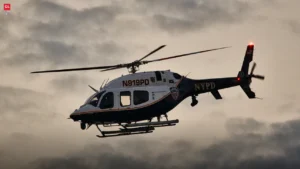
- Henry Hill woke on a Sunday morning in May 1980 to a red helicopter hovering over his house in Rockville Centre.
- Arrested that day, he faced twenty-five years to life in a massive narcotics conspiracy.
- On 27 May 1980 he signed the Justice Department agreement and vanished into the Witness Protection Program with his family.
Fifty feet from his own driveway, a man in a windbreaker jammed a gun against Henry Hill’s head.
The man was a cop. Hill knew it at once. Only cops talked that way. If it had been wiseguys, he would not have heard a thing. He would have been dead. It was the end of his last day as a free man.
Henry Hill was a Lucchese family associate. He had helped plan the Lufthansa robbery, the six-million-dollar heist at Kennedy Airport in December 1978. At least eight of the men who took part in it were already dead, killed on Jimmy Burke’s orders. Hill was snorting about a gram of cocaine a day and selling heroin and cocaine on the side, against the orders of his boss, Paulie Vario.
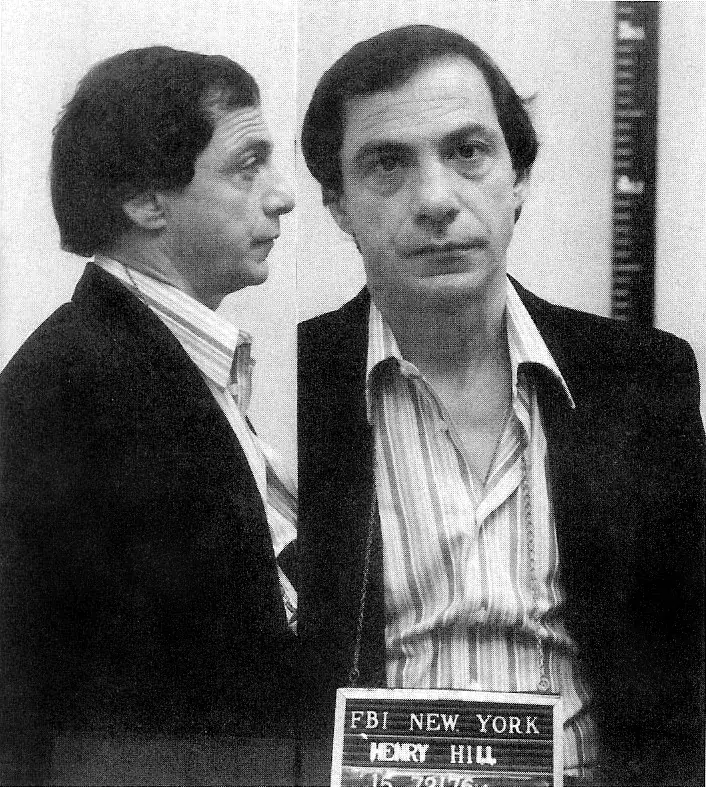
The day began at seven on a Sunday morning. Hill woke to a red helicopter hovering over his house in Rockville Centre. He was supposed to pick up his brother Michael from New York Hospital. Michael had spina bifida. First Hill had to drop off a bag of guns at Jimmy Burke’s place in Howard Beach. The guns had come from a man at a Connecticut armory the night before. Jimmy had silencers and wanted guns to fit them. Jimmy was on parole and still feeling the heat from Lufthansa.
Jimmy took one look at the guns and rejected them. His silencers would not fit. Hill was stuck with a bag of guns he could not keep and could not sell. He hid them in his mother’s garbage cans, under the carport cover. Then he drove to the hospital at eighty miles an hour on the Long Island Expressway, with the helicopter overhead again. Before the Midtown Tunnel he nearly hit a twenty-car pileup. He stopped inches away. A doctor at the hospital gave him ten milligrams of Valium.
Back home, Hill cooked dinner. He braised beef, pork butt and veal shanks for ragu. He made ziti with meat gravy. There were roast peppers, string beans with olive oil and garlic and veal cutlets. It was the last dinner he would cook as a free man. He did not know that yet.
That night a courier named Judy Wicks was to fly to Pittsburgh with half a kilo of heroin. The flight left at eleven. Judy looked like a Kansas preacher’s daughter. Sometimes she borrowed a baby for the trip, to look innocent. The heroin was for Paul Mazzei, a Pittsburgh distributor who ran a dog-grooming salon as a front.
Hill spent the afternoon trying to shake the helicopter. He went shopping at a mall. By four o’clock the helicopter was gone. It must have run out of gas, he thought. He called his partner, Bobby Germaine, from a phone booth in the mall. He was paranoid about the house phone. He drove an evasive route to Germaine’s garden apartment in Commack and picked up the heroin package.
His girlfriend Robin called while he was mixing the heroin. They argued. Robin stored and cut dope at her place. Her basement apartment in Lakeview Avenue was the ring’s cutting room. Hill called Judy and told her to leave the house and use a phone booth. “Don’t use the house phone,” he said. Judy used the house phone anyway. She booked the Pittsburgh flight and called Paul Mazzei from it. Hill knew what that meant. “Now the cops know everything,” he thought. They knew a package was leaving his house for the airport. They knew the time and the flight number.
Now the cops know everything.
Judy insisted on going home first, for her lucky hat. It was blue and pink. Hill hid half a kilo of heroin in a recessed light near the entry steps of his house. Then he drove out to meet her. His car was blocked almost at once.
The arrest was the end of a case that had been building for months. Detective Daniel Mann of the Nassau County narcotics squad had started with a nineteen-year-old from Commack, arrested selling twelve hundred dollars’ worth of Quaaludes. The boy was already a police informant. He gave up Hill’s ring. Mann got a thirty-day wiretap order on Hill’s house and on Robin’s basement apartment. Recording began in March 1980. By the time Hill was arrested, the police had thirty-five reels of tape, twenty-four hundred feet each.
The police had been watching everything. Helicopters followed Hill’s car. His garbage was collected and searched. Flight times were written on notepaper in the trash. The ring spoke in code: opals and stones and gems meant drugs. Hill was handling eight kilos of cocaine a week. He offered couriers five thousand dollars a trip.
Thirteen other people were arrested with Hill, among them Paul Mazzei and Robert Ginova, a pornography producer who drove a chocolate-coloured Rolls-Royce. Bobby Germaine was a fugitive, wanted for a jewelry robbery. The nineteen-year-old informant turned out to be Germaine’s own son. Robin’s kitchen utensils were covered in drug traces. Hill was facing twenty-five years to life, Pileggi writes, because his girlfriend hated to wash dishes.
In jail, Hill faced a life sentence. His wife Karen could be tied into the case. His girlfriend could be tied in too. He had four years left on an extortion parole. The federal prosecutor, Edward McDonald of the Organized Crime Strike Force, saw Hill as a bonanza. Within twenty-four hours the Nassau case was turned over to the feds.
Karen, meanwhile, was saving what she could. In court, Hill signalled to her with an arched hand. The drugs were on a ledge behind the recessed lights. Karen went home and flushed about a pound of heroin down the toilet. She had flushed eighteen thousand dollars’ worth of heroin. Bail was set at a hundred and fifty thousand dollars. Hill wanted to stay inside, to dry out.
Jimmy Burke was calling every day. Lenny Vario sent a message: Henry would commit suicide first, before talking. Karen was lured to Jimmy’s shop on Liberty Avenue. A creepy man waited in a store with painted-out windows. She did not go in. Paulie Vario would not help. He had warned Henry at his niece’s wedding. At Geffkens Bar he gave Karen three thousand dollars. He was crying as he turned his back.
The feds played Hill a tape. On it, Angelo Sepe and Anthony Stabile talked about getting rid of him. Informants said Hill was next on the hit parade. Jimmy told him not to worry about it. Hill did not believe him. He had spent eighteen days in jail when Karen bailed him out on 16 May, with ten thousand dollars in cash, at one in the morning on a Saturday. He slept with a gun.
On Sunday he met Jimmy at the Sherwood Diner on Rockaway Boulevard. Jimmy sat in the end booth. He had not touched his honeydew melon or his coffee. He fidgeted with his glasses. Court papers lay on the table. They talked in half-words. Jimmy wanted him to go to Florida. They would meet on Wednesday at a bar on Queens Boulevard in Sunnyside, owned by Charlie, Hill’s drug supplier. Hill had never heard of the bar. He drove past. It had a back entrance and a parking area where a body bag in a rug could be taken out unseen.
On Monday, Jimmy asked him to go to Florida with Anthony Stabile to kill Bobby Germaine’s son, the informant. Stabile and Sepe were the ones pushing to kill Hill himself. Hill understood. The Florida trip was a trap.
Hill was arrested as a material witness in the Lufthansa case by eight agents when he pulled up to his house. Karen and the children, Judy and Ruth, were taken to the FBI office in Queens. McDonald told them the truth: either they all went into the witness protection programme, or they were all in danger. Henry would cooperate only if Karen agreed. She agreed.
 The greatest escape of the war ended in fifty murders
On Tuesday 22 May 1980, Pileggi writes, Henry Hill decided to cease to exist. He was facing a life sentence in a massive narcotics conspiracy. The feds were asking about the six-million-dollar Lufthansa robbery. The New York police were asking about the ten murders that followed it. The Treasury was asking about crates of automatic weapons and Claymore mines stolen from a Connecticut armory.
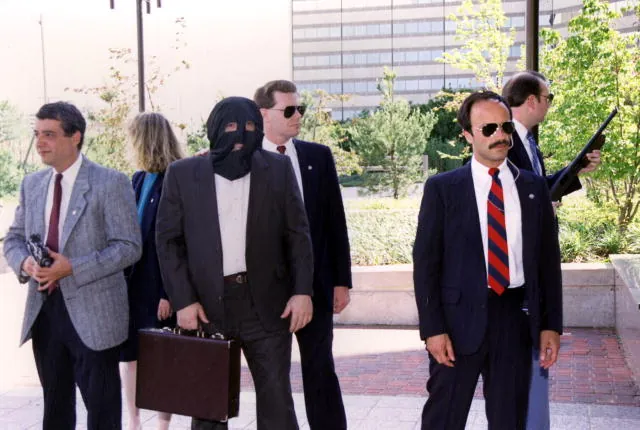
On 27 May he signed the agreement with the Justice Department. He would inform on James Burke and Angelo Sepe about the Lufthansa robbery. He would testify before grand and petit juries. In return he would not be prosecuted for Lufthansa or for the Nassau narcotics case. He and his wife and children would be placed in the Federal Witness Protection Program. The agreement would be void if he did not cooperate fully.
The marshals packed the family and moved them every couple of days, from a motel in Riverhead to Connecticut to Montauk. They got new names and new Social Security numbers. The children’s school transcripts were blank for their previous school. Henry Hill became one of four thousand four hundred people in the Witness Protection Program. The wiseguy who had cooked ragu on his last free Sunday was gone. So were his wife and his two daughters. They had ceased to exist.
Source: Nicholas Pileggi, Wiseguy (1985), Introduction and Chapters 19–22.
Author Profile

- The Grand Lines covers news that impacts lives, uncovers truths, and keeps you fully informed.
Latest Entries
 True StoriesNovember 19, 2026The last day of Henry Hill, the wiseguy who vanished
- Predictive AlertsNovember 19, 2026Faisalabad AQI 191 Unhealthy at 7:00 AM
- ChiniotNovember 18, 20261,180g heroin seized, suspected seller held in Chenab Nagar
- FaisalabadNovember 18, 2026Teenage boy traced in Samundri, reunited with parents