
Key Points:
- A hundred thousand prisoners dug a 140-mile canal by hand in twenty months, with no machinery, no concrete and no foreign exchange.
- Food followed output: a prisoner who met his norm ate; one who fell short went hungry — the ration drove starving men through granite in the Arctic winter.
- Solzhenitsyn put the dead at a quarter of a million, against 12,500 freed early; the canal itself was sixteen feet deep, too shallow for any ship to use.
Prisoners dug a 140-mile canal by hand in twenty months; a quarter of a million died.
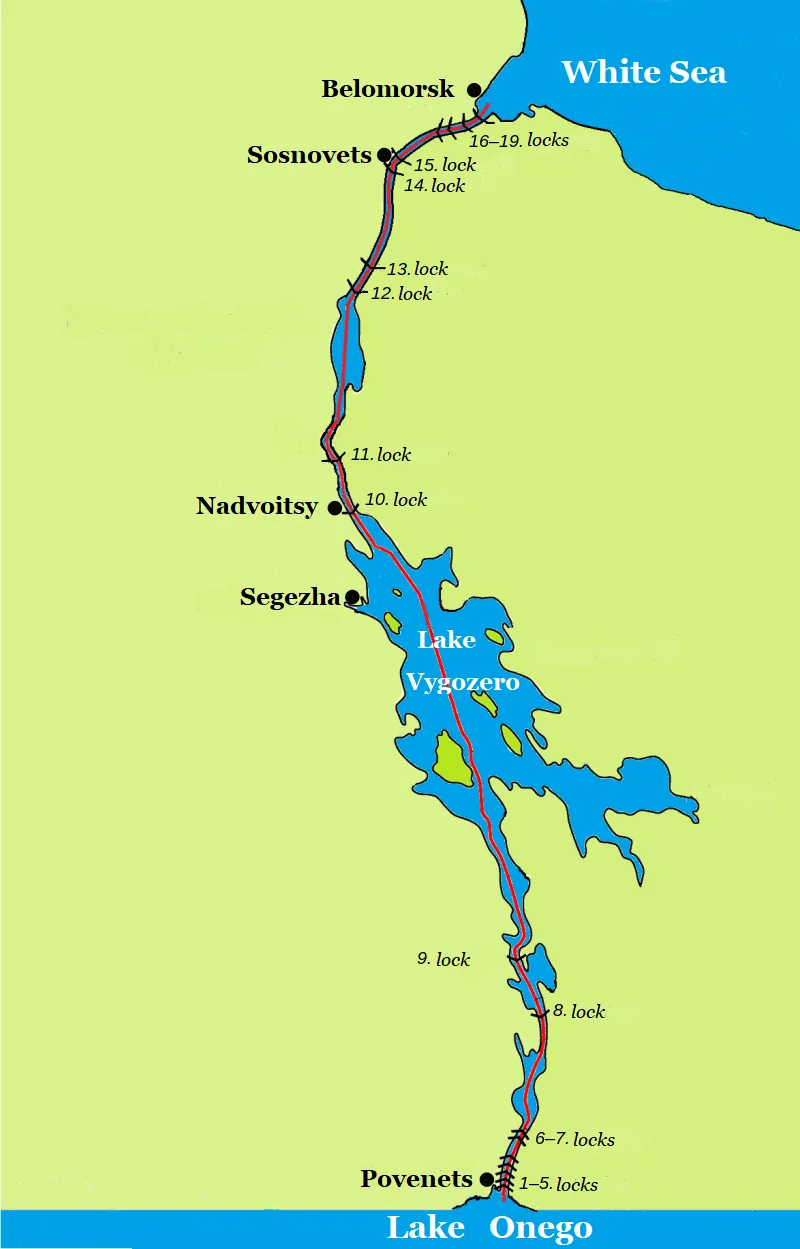
The order came from Stalin himself. A canal would join the White Sea to the Baltic Sea across the forests and swamps of Karelia, in the far north of Russia.
It would be 140 miles long. It would be finished in twenty months, from September 1931 to April 1933.
And it would be built by prisoners, with no machinery and not one kopeck of foreign exchange.
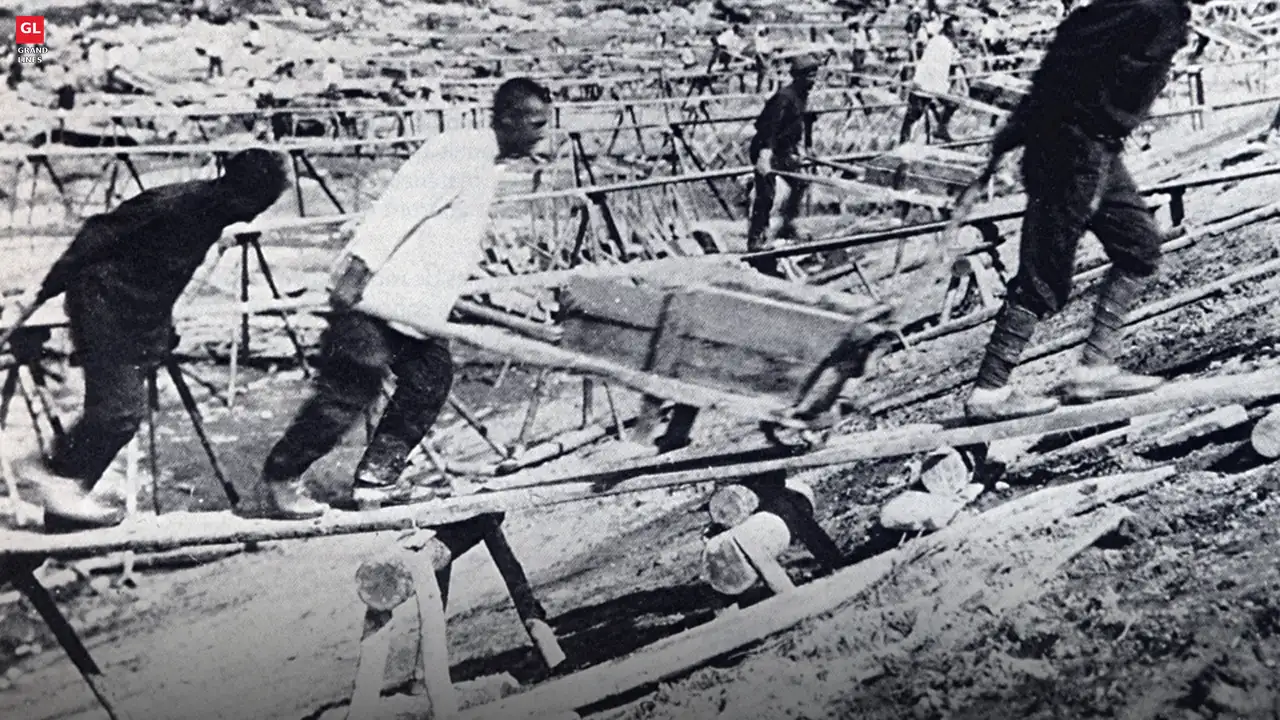
The men who built it were called zeks, the prisoners of the Gulag. A hundred thousand of them worked on the canal at one time.
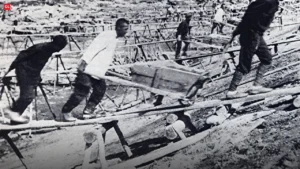
There were no tractors and no cranes. There were no concrete mixers and no bulldozers.
The tools were the wheelbarrow and the pick. The power was human muscle.
The engineers said the lock walls should be concrete. The camp chiefs said there was no time.
The engineers said they needed iron. The chiefs told them to use wood.
The engineers said they needed construction machinery. The chiefs said there would be none.
Everything was built the way men had built four thousand years earlier.
The daily norm for a prisoner was to break up two and a half cubic yards of granite and move it a hundred yards in a wheelbarrow. The wheelbarrows tottered on wet planks and turned upside down.
It took an hour to load one with frozen soil. Trees were felled without saws or axes: ropes were tied around them and brigades rocked them back and forth until they tore out of the ground.
The men came from every corner of the Soviet Union. Turkmen and Tajiks arrived from Central Asia in their robes and turbans and were sent out into the Karelian winter.
Women arrived in silk dresses and were handed a wheelbarrow on the spot. Students and Esperantists, priests and engineers, thieves and peasants all pushed the same wheelbarrows.
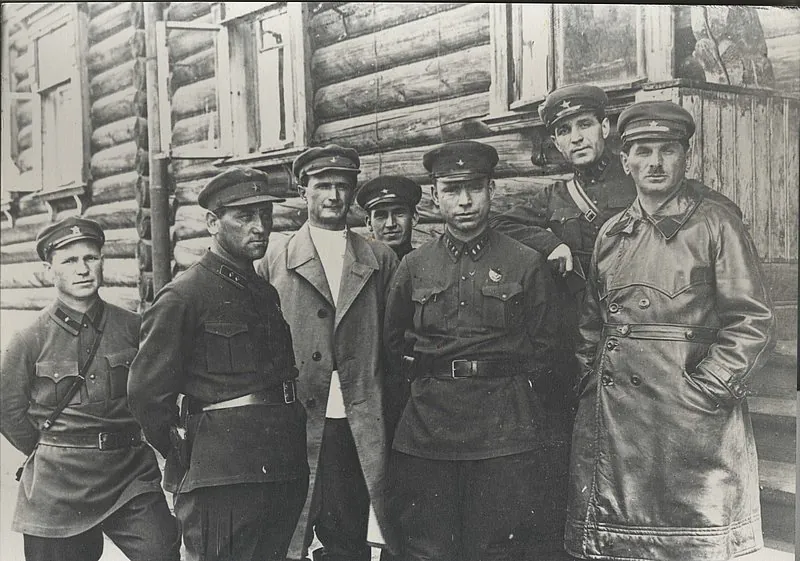
The man who ran the work was Naftaly Frenkel. He had been born in Constantinople and had become a millionaire in the timber trade, the timber king of the Black Sea.
The secret police arrested him and sent him to the Solovki prison camp in 1927. Within two years he was sitting with Stalin for three hours, sketching the future of the camps on a map.
He became the works chief of the canal, the overseer of the whole labour battle.
Frenkel’s system was simple. Food followed output.
A prisoner who met his norm ate. A prisoner who fell short went hungry.
The ration was the lever that drove a hundred thousand starving men to dig through granite in the Arctic winter.
The winter of 1931-32 was the first and the worst. Solzhenitsyn writes that a hundred thousand prisoners died in that one winter, a number equal to the whole working force on the canal.
He adds that the figure is more likely an understatement than an exaggeration.
A work supervisor named Vitkovsky, who had been a prisoner on Solovki before the canal, described the evenings. At the end of the workday, corpses were left lying on the work site.
The snow powdered their faces. One man had frozen to death hunched beneath an overturned wheelbarrow, his hands hidden in his sleeves.
Two had frozen back to back, leaning against each other. At night the sledges went out and collected them.
The drivers threw the corpses onto the sledges with a dull clonk.
In the summer, bones remained from corpses that had not been removed in time. They went into the concrete mixer with the gravel.
They went into the concrete of the last lock at Belomorsk, where they are preserved forever.
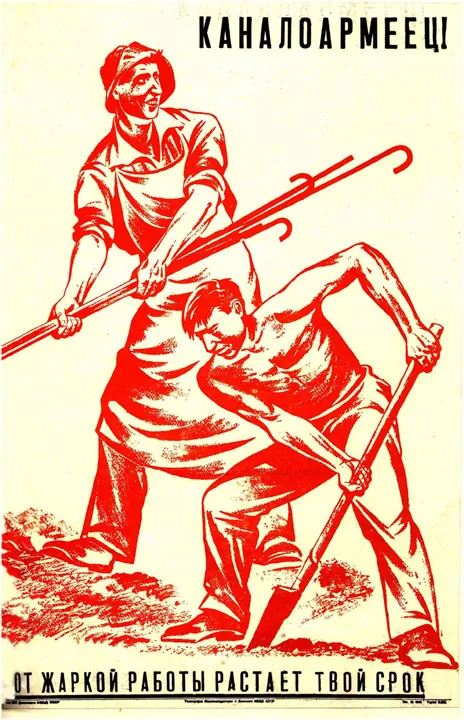
The men were driven by more than hunger. Loudspeakers in the barracks cried out day and night that the canal was being built on the orders of Comrade Stalin.
Brigades competed against brigades. Locks competed against locks.
Storm assaults were proclaimed without warning. In April 1933 a final forty-eight-hour storm assault kept thirty thousand people awake without sleep.
Meanwhile the prisoners cheated wherever they could. The log cribs that formed the lock walls were supposed to be filled with stone and earth.
Some were filled with ice instead, which would melt in the spring and let the water through. The camp called this tufta, falsified work.
In February 1933 engineers who had been released early were rearrested for it.
On 1 May 1933, the head of the secret police, Genrikh Yagoda, reported to Stalin that the canal had been completed on time.
Two months later Stalin himself came to inspect it, sailing down the canal with Voroshilov and Kirov in wicker armchairs on the deck of a steamer, joking and laughing and smoking.
In August 1933, a hundred and twenty of the Soviet Union’s most famous writers were taken on a steamer trip down the canal. Thirty-six of them wrote a book about it, edited by Maxim Gorky.
The book was called The White Sea-Baltic Stalin Canal. It praised the canal as a triumph of re-education, a place where criminals were remade into builders of socialism.
The book said, on page 190, that no one had died during the construction.
Read More:
 He led his own captors to the prison
Within three years, most of the canal’s leaders glorified in that book had been arrested as enemies of the people. Every copy of the book was removed from the libraries and destroyed.
Private owners destroyed their own copies, afraid that owning one would earn them a prison term.
Solzhenitsyn put the dead at a quarter of a million. Against that, 12,500 prisoners were freed early for good work.
The canal’s own overseers had their names set out in stones along the banks: Firin, Herman, Frenkel, Kogan, Rappoport, Zhuk. Solzhenitsyn called them six hired murderers, each accounting for thirty thousand lives.
A quarter of a million died to build a canal no ship could use.
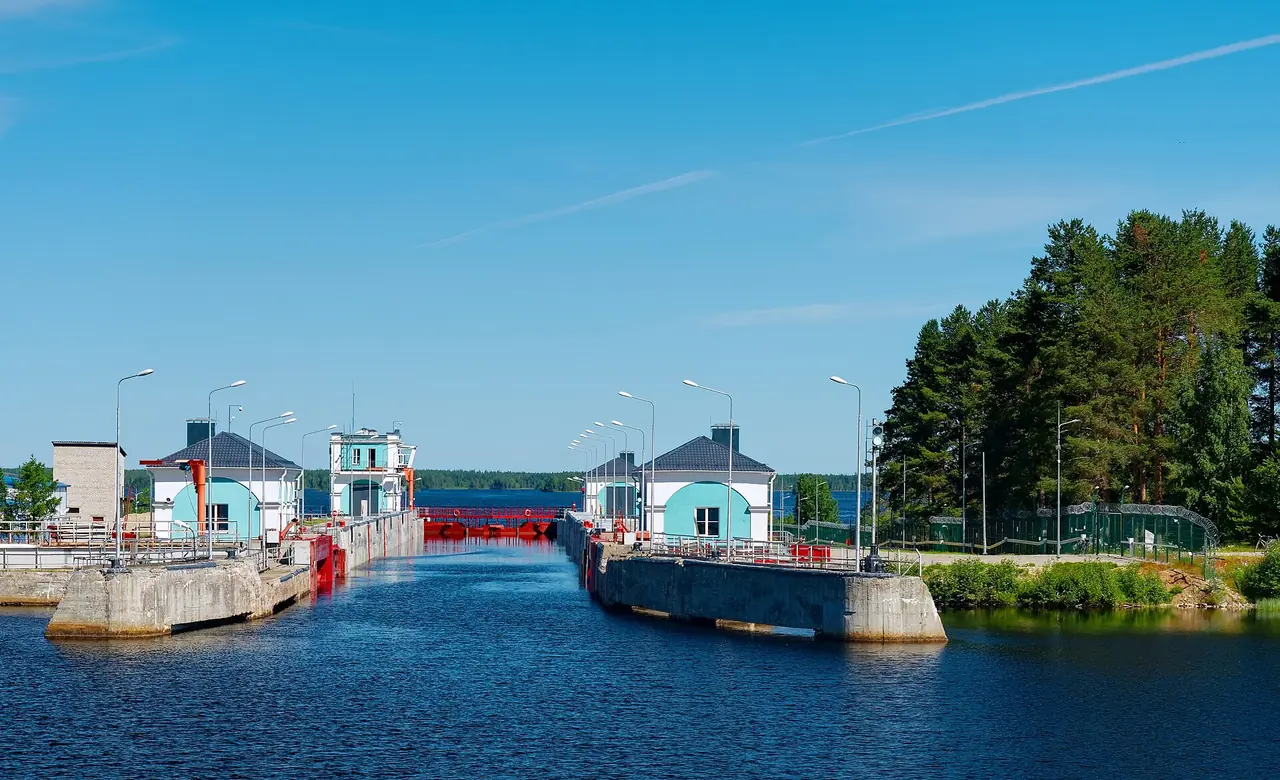
The canal itself was the final mockery. It was only sixteen feet deep.
Submarines could not pass through it under their own power; they had to be loaded onto barges and hauled through. Within a year of its opening, a project was already under way to rebuild it and deepen it.
For half the year it was frozen solid.
In 1966, Solzhenitsyn walked along the canal himself. There was no passenger traffic.
There were no steamers. The lock gates stayed shut.
In eight hours beside the canal he saw two barges, each carrying the same pine logs, passing each other in opposite directions. Cancelling one load against the other, he wrote, you get zero.
And a quarter of a million to be remembered.
Source: Aleksandr Solzhenitsyn, The Gulag Archipelago, Vol. II, Part III, Chapter 3.
Author Profile

- The Grand Lines covers news that impacts lives, uncovers truths, and keeps you fully informed.
Latest Entries
 FaisalabadNovember 28, 2026Literary festival opens with poetry, memories and debate
- BusinessNovember 28, 2026Silver Rate in Faisalabad Today: 28 November 2026
- True StoriesNovember 28, 2026The canal built on bones that no ship could use
- CartoonNovember 28, 2026Faisalabad Cartoon: ‘Dad, why is our street so dark?’