
Key Points:
- A Soviet artillery captain was arrested at the front in the last months of the war because of letters he had written to a school friend.
- His captors could not read the map, so he led them to the Lubyanka, the secret police headquarters he mistook for the Foreign Ministry.
- Eight years of imprisonment, three years of exile and six years of underground writing followed before the book that told the world about the Gulag was written.
A captain was arrested at the front for letters he had written to a school friend.
Solzhenitsyn began his book with a question. Why did the arrested never cry out?
Arrests were made on the strength of false denunciations. Millions were subjected to silent reprisals.
If many such outcries had been heard all over a city in the course of a day, would arrests still have been so easy?
In 1927, in Serpukhov Square in Moscow, two Chekists tried to arrest a woman during the day. She grabbed hold of a streetlamp and began to scream.
She refused to submit. A crowd gathered.
The two young men became flustered. They could not work in the public eye.
They got into their car and fled. She should have gone to a railway station and left at once.
Instead she went home to spend the night. During the night they took her off to the Lubyanka.
Solzhenitsyn’s own arrest was, he wrote, probably the easiest imaginable kind of arrest. It did not tear him from the embrace of kith and kin.
It did not wrench him from a deeply cherished home life. It happened in one pallid European February, in the last months of the war.
He was an artillery captain on the Second Byelorussian Front, in East Prussia. He was taken from a narrow salient on the Baltic Sea.
There, depending on one’s point of view, either the Russians had surrounded the Germans or the Germans had surrounded the Russians. He was deprived of his artillery battery and the scenes of the last three months of the war.
The brigade commander called him to headquarters and asked for his pistol. He turned it over without suspecting any evil intent.
Suddenly, from a tense group of staff officers in the corner, two counterintelligence officers stepped forward. They crossed the room in a few quick bounds.
Their four hands grabbed at the star on his cap, his shoulder boards, his officer’s belt and his map case. They shouted: “You are under arrest!”
Burning and prickling from head to toe, all he could exclaim was: “Me? What for?” They took his notes on political subjects along with his map case.
Then the brigade commander, Colonel Zakhar Georgiyevich Travkin, called him back. “Solzhenitsyn. Come back here.”
The counterintelligence captain and major shouted that it was forbidden. Travkin ignored them.
Solzhenitsyn had never known him very well. Travkin had never condescended to ordinary conversation with him.
His face had always conveyed an order, a command, wrath. But now it was illuminated in a thoughtful way.
“You have… a friend on the First Ukrainian Front?” he asked. Solzhenitsyn understood at once.
He had been arrested because of his correspondence with a school friend. Travkin rose from his chair, reached across the table and shook his hand.
“I wish you happiness, Captain!” he said. Solzhenitsyn was no longer a captain.
He was an enemy of the people.
Ten days before, he had led his reconnaissance battery almost intact out of the fire pocket where the twelve heavy guns of the artillery battalion had been left. German shells were tearing up the earth two hundred yards away.
The windowpanes rattled. Travkin knew what he was doing.
Years later Solzhenitsyn wrote that nothing happened to Travkin. They met again cordially.
Travkin was a retired general and an inspector of the Hunters’ Alliance.
That night the SMERSH officers could not read the map. They handed it to Solzhenitsyn and asked him to tell the driver how to get to counterintelligence headquarters at army level.
He led them to that prison. He led himself there too.
In gratitude they put him in a punishment cell.
He led them to that prison. He led himself there too.
The cell was a closet in a German peasant house. It was the length of one human body and wide enough for three men to lie packed tightly, four at a pinch.
Solzhenitsyn was the fourth. He was shoved in after midnight.
Three tank officers were already lying there. A smoky kerosene lantern burned.
The floor was covered with crushed straw. Eight boots pointed at the door.
Once or twice the other fellows woke up numb on one side. Then they all turned over at the same time.
The three tankmen were officers whose shoulder boards had been torn off and whose decorations had been removed. Their tank unit had arrived for repairs in the village where the SMERSH headquarters of the Forty-eighth Army was located.
The officers had been drinking. They broke into a bath where two girls were bathing.
One of the girls was the “campaign wife” of the army’s Chief of Counterintelligence. A rear sergeant tore off their shoulder boards and their decorations.
They awaited court-martial.
A fifth man was tossed into the closet. He was a young fellow, a prisoner of war whom the Germans had sent through the lines to blow up bridges.
He had turned himself in at the nearest battalion headquarters. The battalion commander did not believe him.
He sent him to the nurse for a pill.
In the morning came the toilet call. “Out for toilet call! Hands behind your backs!”
Machine gunners stood around the courtyard. Behind the barn the snow was trampled and soiled with human faeces.
The five prisoners squatted. Two machine gunners pointed their machine pistols at them.
The master sergeant shouted: “Come on, hurry it up! With us they do it quickly!” A senior lieutenant from Rostov answered him.
He had a red scar across his cheek. “And with us we do it slowly,” he said.
“Where do you mean, with us?” the sergeant asked. “In the Red Army,” the lieutenant said.
SMERSH took its name from the Russian words for “death to spies”.
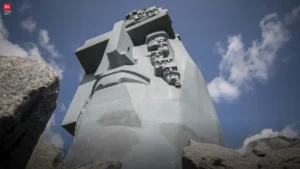 Twelve men fought their way out of a death camp
Solzhenitsyn spent one day in the counterintelligence prison at army headquarters and three days at front headquarters. His cellmates educated him.
Once arrested, a man was never released. A ten-year sentence was inevitable.
Then came four days of travelling “like a free person among free people”. His flanks had already lain on rotten straw beside the latrine bucket.
His eyes had already beheld beaten-up and sleepless men. His mouth had already tasted prison gruel.
Yet he kept silent. He did not call out one word on the streets of Bialystok.
He did not utter a sound at Volkovysk Station. He walked along the Minsk Station platform beside those same bandits as if nothing at all were amiss.
On the eleventh day after his arrest, three SMERSH men of the Special Convoy brought him to Byelorussian Station in Moscow. The three officers were burdened by four suitcases of war booty plundered in Germany.
They were bringing the loot to their families in the Fatherland under the pretext of convoying him. Solzhenitsyn lugged a fifth suitcase.
It contained his diaries and his literary works. They would be used as evidence against him.
The officers did not know Moscow. Solzhenitsyn had to pick the shortest route to the prison.
He personally conducted them to the Lubyanka, the headquarters of the secret police, which he confused with the Ministry of Foreign Affairs.
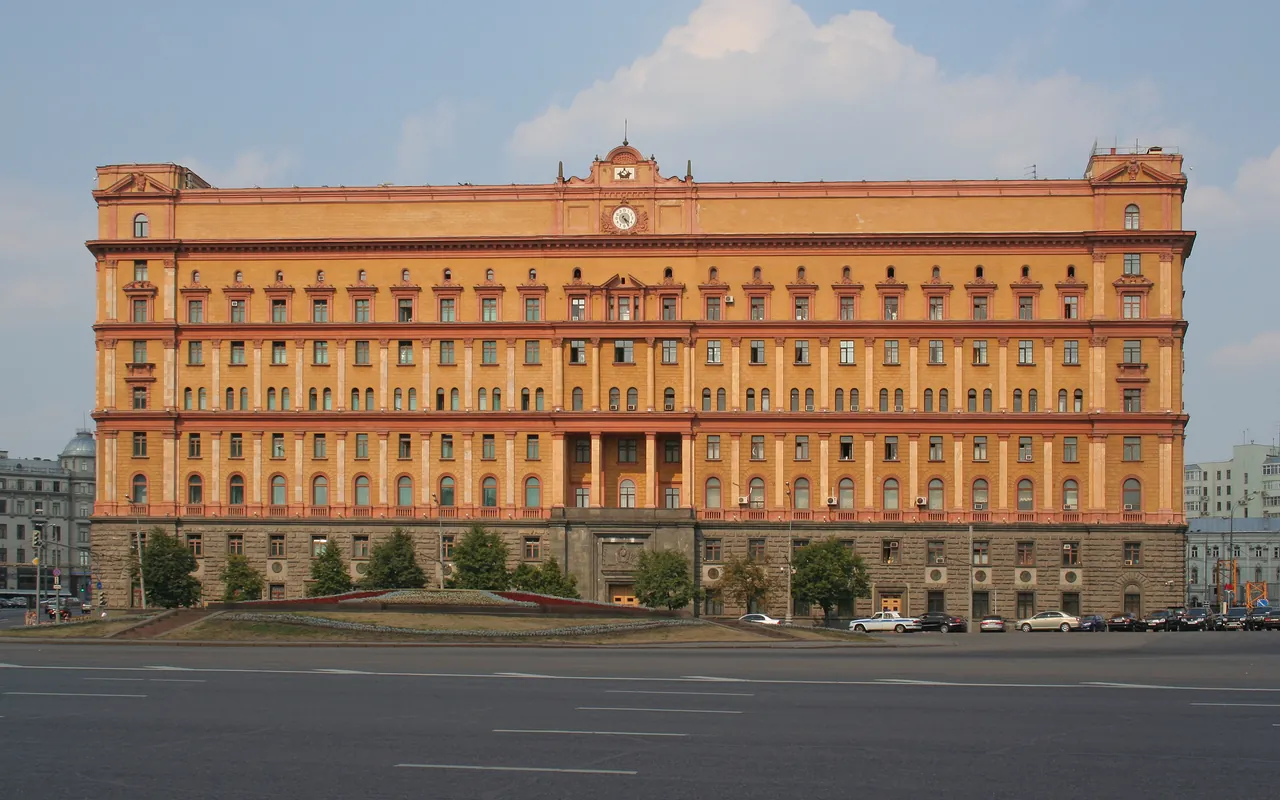
At Byelorussian-Radial station the escalators were packed with Muscovites under a white-ceilinged dome. They kept coming in an endless ribbon from below, reaching toward him for at least one word of truth.
Solzhenitsyn kept silent. Some men keep silent because they still hope for a favourable outcome.
Others do not know what to shout. His heart was too full of emotion.
His eyes had seen too much for that whole ocean to pour forth in a few disconnected cries.
“Here my cry would be heard by two hundred or twice two hundred,” he thought, “but what about the two hundred million? Vaguely, unclearly, I had a vision that someday I would cry out to the two hundred million.” The escalator dragged him down.
He passed Okhotny Ryad and the Metropole Hotel. He reached Lubyanka Square, the Golgotha of Lubyanka Square.

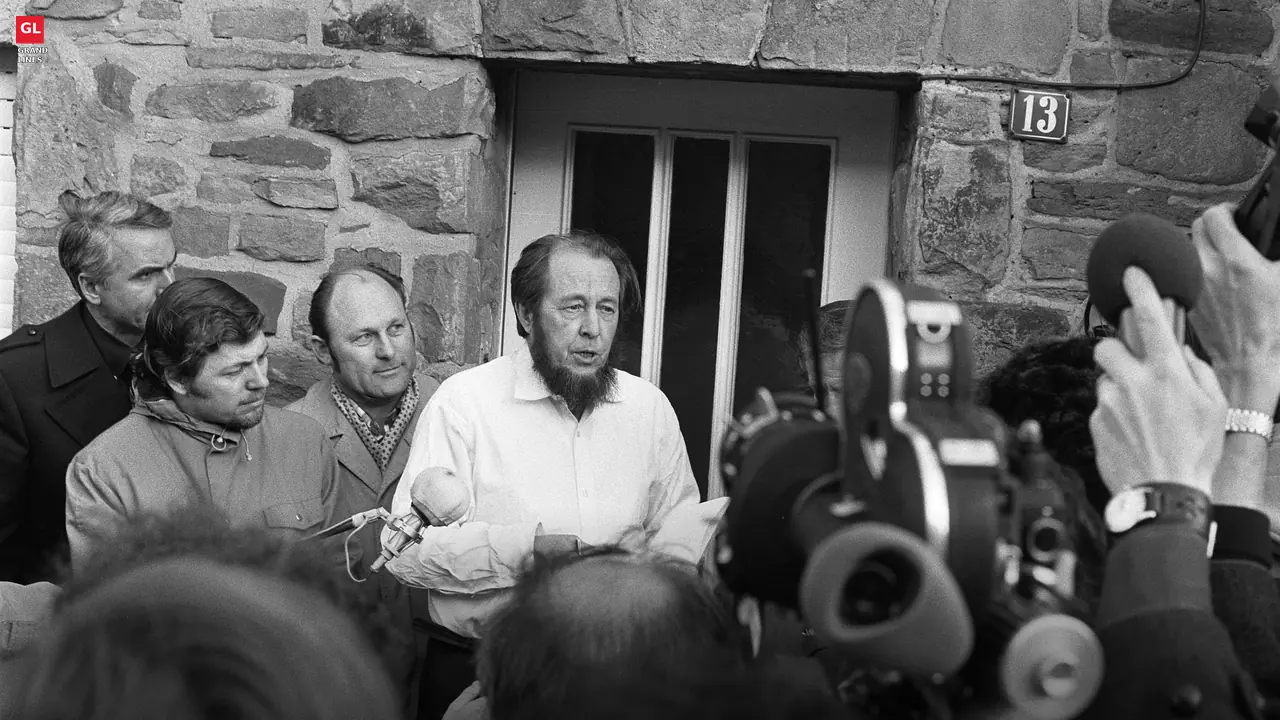
The arrest was the start of everything that followed. As he put it, he got through eight years of imprisonment, three years of exile and another six years of underground authorship.
The captain who had been arrested at the front for his letters became the man who wrote the book that told the world about the Gulag.
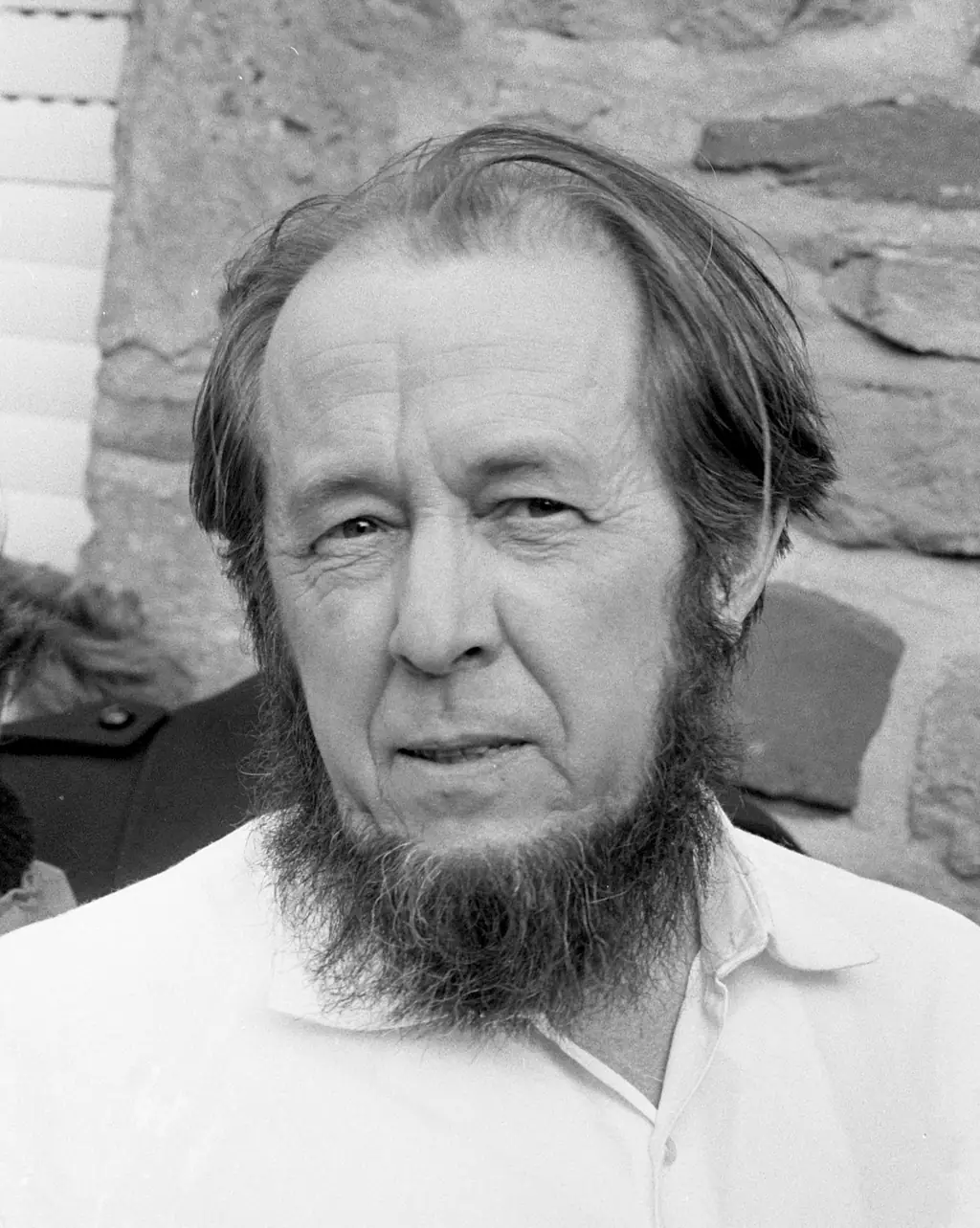
Source: Aleksandr Solzhenitsyn, The Gulag Archipelago, Vol. I, Chapter 1 (“Arrest”); the closing line is from Chapter 5 (“First Cell, First Love”).
Author Profile

- The Grand Lines covers news that impacts lives, uncovers truths, and keeps you fully informed.
Latest Entries
 FaisalabadNovember 27, 2026Sadar police arrest man in ex-wife murder case
- ChiniotNovember 27, 2026Chiniot sweep: 23 held, 300 vehicles challaned
- FaisalabadNovember 27, 2026Robbery foiled, patrol team gets Rs20,000 prize
- FaisalabadNovember 27, 2026Cleanliness, food safety top Faisalabad admin agenda